Boaz’s Commune
Black BoxBoaz’s Commune is a small, expanding community established by Boaz Gideon on the abandoned family property at Zikhron Yaakov. It begins as a project Alexander Gideon assigns to Manfred Zakheim, but develops into more than a place to house Boaz: its members clear and cultivate the grounds, repair the neglected house, and build a shared routine of work. The commune’s restoration of the estate creates a practical form of belonging, while its daily life brings Alexander, Ilana Sommo, and Boaz into a new and uneasy proximity.
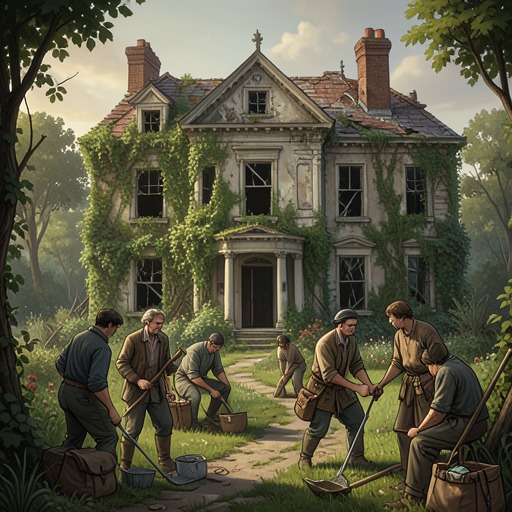
Formation on the abandoned property
The commune begins with Alexander’s instruction that Manfred find Boaz and help him set up a settlement on his father’s abandoned land. Manfred recounts that he went to Zikhron Yaakov, pleaded, paid, and dealt with the local police in order to carry out the assignment. His account presents the foundation as a costly act of loyalty to Alexander, but also as an arrangement made under pressure: Manfred resents the latest task even as he continues to fulfill it. Boaz, whom Manfred describes as imposing but mentally unsettled, is nevertheless placed at the center of the enterprise.
The circumstances that surround the commune include other, more explicitly political efforts to acquire land. Michel Sommo is associated with organizations that advocate territorial expansion and with plans for transactions involving land near Bethlehem; he also treats Alexander’s wealth as a potential resource for projects framed as the redemption of the land. Those initiatives belong to Michel’s political and commercial activity, not to the commune itself. The distinction matters: the commune’s documented work is the occupation and restoration of the abandoned family property, while the wider correspondence shows how easily land, money, religious purpose, and political ambition become entangled around it.
Members and shared routine
At one stage, eight young people are staying at the property. Alexander describes a household organized quietly around communal tasks, with Boaz occupying a role of first among equals rather than acting as a formal authority. Members sing while working or gathering around a nighttime fire; the account also records a mix of young people from different backgrounds, including Americans and a French woman. Later, the commune is said to be slowly expanding as additional people arrive. The evidence offers glimpses of its population rather than a formal membership list or a stated constitution.
Work is a defining part of life there. Boaz clears roots and branches, removes stones, carries materials, and helps lay a new concrete floor. Alexander, weakened by illness, is gradually given a modest place in the work roster: for about half an hour on mornings when his pain allows, he sorts seeds or folds empty sacks, sometimes falling asleep as he works. This small assignment makes participation possible without pretending that his physical limits have disappeared. The commune’s routine accommodates his diminished strength while giving him a place within the life of the household.
Rebuilding the estate and providing for daily life
The members’ labor steadily changes the property. They clear weeds and overgrown growth, dig the ground, replace flower beds with vegetables, prune orchard trees, and plant new saplings. The ruined fish pool is repaired and stocked again, while the former gardens yield to cultivated beds and agricultural equipment. A water hole dug by Volodya Gudonski is cleared and restored by his grandson and the commune, joining the family’s past to its present work on the land.
The restoration extends indoors and into the outbuildings. The house is cleaned, its electrical wiring renewed, and damaged floors replaced with concrete. Pigeons are moved to a dovecote, while a peacock continues to wander through the house. The property acquires a workshop, storage areas, kerosene heaters, irrigation equipment, and a small tractor with attachments for cultivation and other farm work. The commune also keeps bees, goats, a donkey, and geese; its members bake bread, make yogurt and cheese, and plan to produce wine from their own grapes. These details describe a settlement working toward practical self-sufficiency, though they do not establish that it has become economically independent.
The reconstruction also creates a place for Alexander within the property. He occupies a room with a view toward the coast, and Boaz makes him a table from packing boxes and eucalyptus branches after Alexander asks for somewhere to use his Baby Hermes typewriter. Boaz also buys him an electric fan on his own initiative. Alexander’s account registers these gestures alongside the heavy work of rebuilding: the commune is not simply restoring buildings and land but furnishing a daily life in which an ill older man can remain present.
Family ties and the commune’s significance
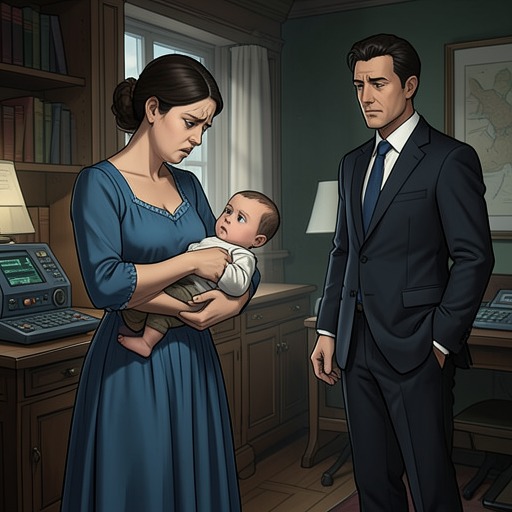
The commune alters the relations among the people who live there and the family members who come and go. Ilana stays at the property and contributes to the vegetable garden; before Michel takes Yifat away, Ilana and Yifat put up scarecrows together. Yifat’s departure is felt as a personal loss within the household, and Ilana asks Michel whether the child asks to return or asks after Boaz. The evidence does not describe a stable, conflict-free family arrangement: the commune gathers people under one roof, but it does not resolve the tensions that brought them there.
Alexander’s place in the community is especially tentative. He enjoys its music, work, and shared evenings, yet describes himself as an outsider to its ordinary life, and Boaz generally limits their exchanges to practical courtesies. Their connection develops through concrete acts rather than sustained conversation. In Alexander’s lucid hours, he teaches Boaz spelling and basic syntax; the lessons reverse their usual positions, making the father a teacher and the son a student even as Alexander depends on Boaz for assistance. The pair’s closeness remains partial, expressed through work, care, and the possibility of learning together.
The commune’s significance lies in the contrast between the derelict estate it inherits and the labor through which it becomes habitable again. Its members do not merely gather around Boaz; they make the property usable through cultivation, repair, and shared tasks. For Alexander, the restored grounds provide a setting in which he can return to his childhood home and encounter Ilana and Boaz anew, without any guarantee that old estrangements will disappear. The settlement thus offers renewal as a material process—cleared land, repaired rooms, food produced, and work adapted to differing abilities—rather than as a complete reconciliation.